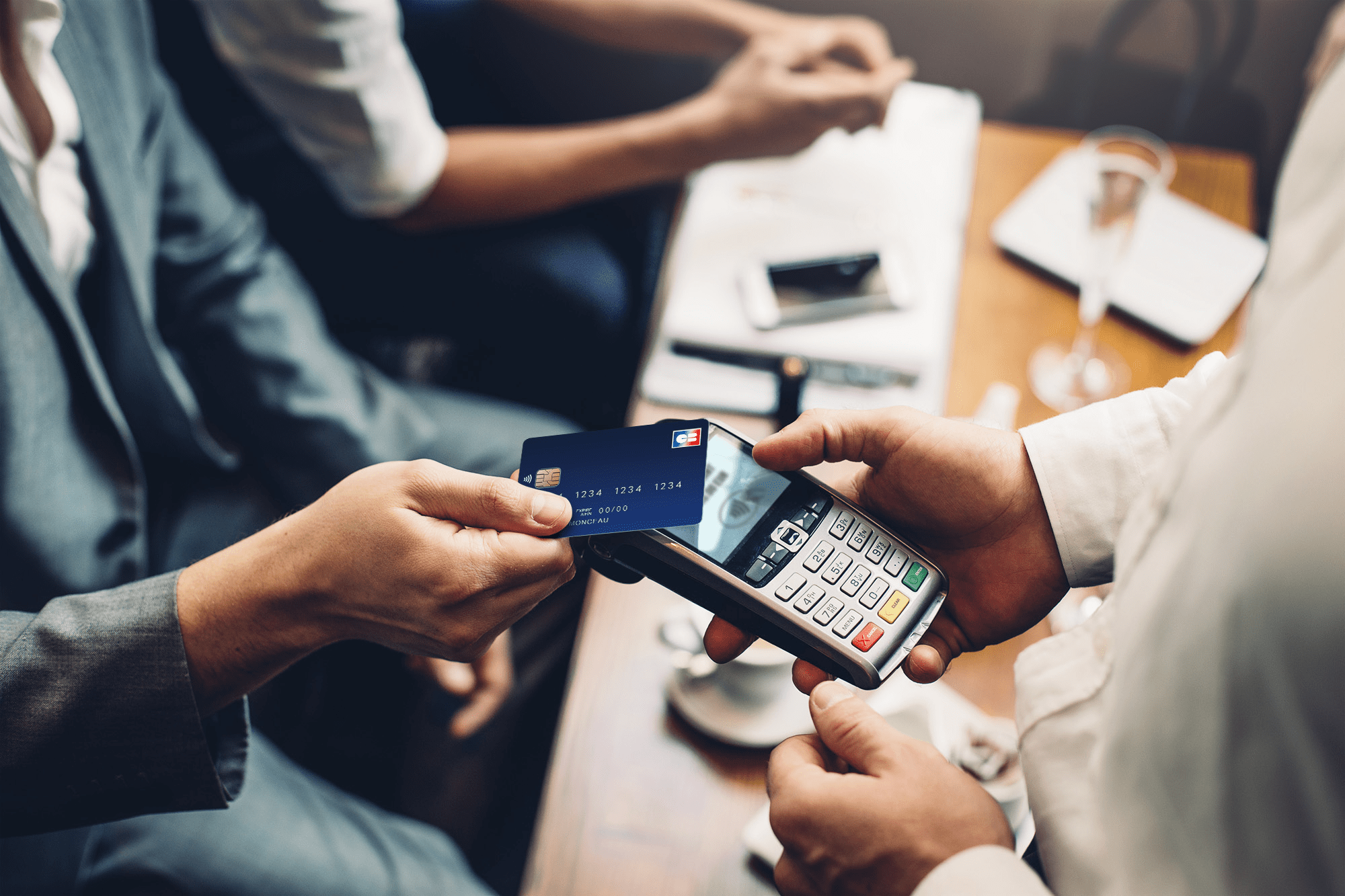
Contactless CB cards have emerged as the preferred means of payment for the French in 2020.
The global COVID-19 pandemic has permanently altered and accelerated changes in everyday life and habits, particularly in the area of payments.
Against the backdrop of consumer spending heavily impacted by the global pandemic, the total value of payments made by card and mobile payment in 2020 was roughly equivalent to that of 2019, even as household spending fell by 7% according to INSEE. 2020 ended with nearly €490 billion in CB payments. In terms of volume, CB payments declined very slightly by about 5%, with 11.8 billion CB transactions in 2020 compared to 12.4 billion in 2019.
This relative stability in CB payments, despite the economic downturn reported by INSEE, is mainly due to the fact that during prolonged closures, lockdowns, or restrictions on retail businesses in various sectors, the French have increasingly turned to card payments for their everyday purchases. The annual CB/Kantar survey, conducted in late 2020, confirms this trend, with 86% of respondents now saying they prefer to pay by card or mobile phone over any other payment method.
2020 will be marked by a further surge in the use of contactless payments. After reaching the first billion transactions in 2017, then surpassing 2 and 3 billion in 2018 and 2019, a total of 4.6 billion contactless CB transactions were made in 2020. The use of this technology — often viewed as one of the preventive measures — was boosted by the increase in the spending limit from 30 to 50 euros, which was successfully rolled out nationwide within a few weeks following the end of the first lockdown.
In 2020, nearly 60% of CB transactions under €50 were made in stores using contactless technology. More than half of all CB payments are now made using contactless technology — either by card or via mobile — in stores, demonstrating the confidence and widespread adoption of this payment method among CB cardholders and retailers.
This trend was also observed in the CB/Kantar survey. Twenty percent of respondents said they used contactless payment for the first time during the health crisis, and 93 percent of regular users said they used it even more frequently.
The number of CB payments for mail-order and e-commerce transactions grew by 12% year-on-year in 2020. In terms of value, mail-order and e-commerce accounted for approximately 22% of all CB payments in 2020. Starting in April 2020, consumers shifted a portion of their everyday purchases to the internet. In the food retail sector, “drive-through” services were particularly popular. Many stores transitioned to an omnichannel model, notably by implementing “click-and-collect” services between the first and second lockdowns.
To support and accelerate this transformation, CB — together with LAB by CB and with the support of the French retail federations and France Num — has launched the “ActionCommerceCB” website, a platform bringing together more than 200 solutions offered by banks, small and medium-sized enterprises, and French start-ups, designed to help independent retailers evolve their distribution models by implementing e-commerce in response to the crisis.
2020 also saw the continued acceleration of the shift toward digital meal vouchers, with a doubling of both the number of cards — nearly 2 million TRD cards issued by meal voucher issuers that are members of CB — and the number of transactions, with nearly 70 million transactions recorded in 2020.
(*) CB/Kantar survey conducted 2–9 November 2020, among a representative national sample of 1,100 individuals aged 15 and older